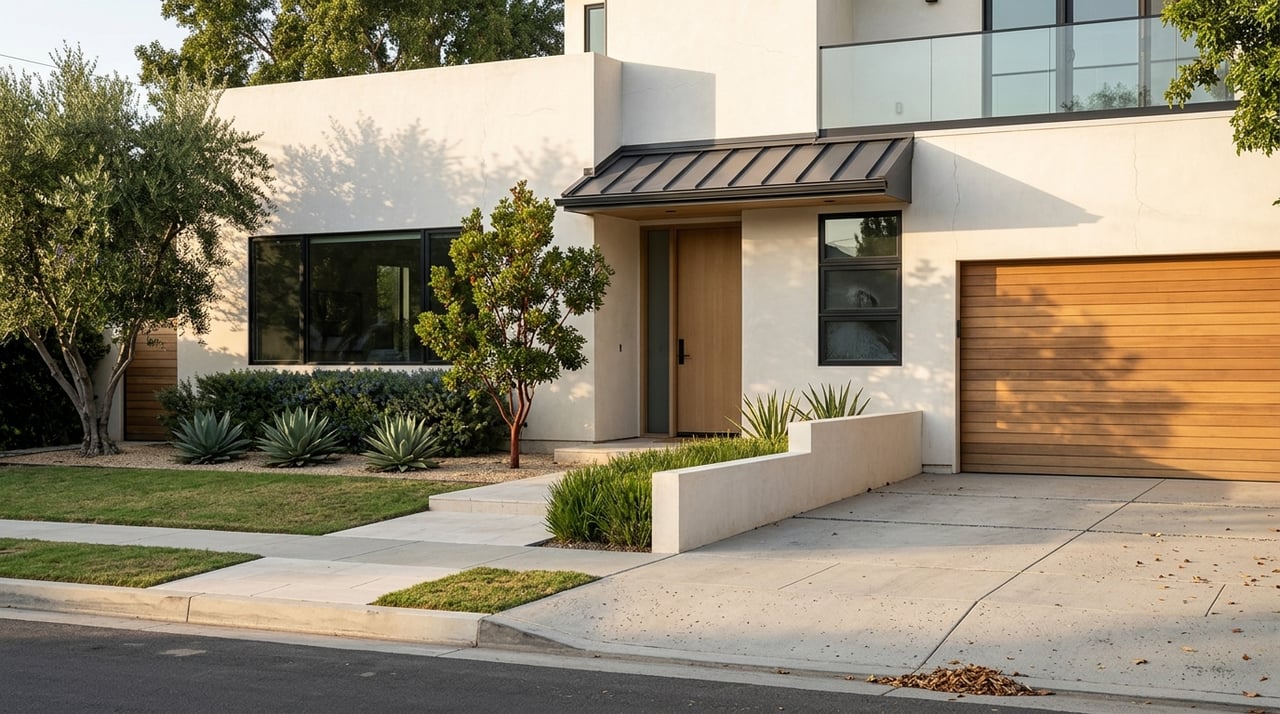
San Marcos Newer Homes Versus Established Neighborhoods
April 2, 2026
April 2, 2026
Trying to choose between a newer home and an established neighborhood in San Marcos? You are not alone. In a market where home values are high and both options can come with meaningful tradeoffs, it helps to look past the listing photos and focus on how each choice fits your lifestyle, budget, and long-term plans. This guide will help you compare newer and older areas of San Marcos with more clarity, so you can make a smarter move. Let’s dive in.
San Marcos has a housing mix that is newer than many buyers expect, but it is not a city made up only of brand-new construction. The median construction year is 1994, and the largest share of homes was built between 2000 and 2009. At the same time, the city also has many homes from the 1970s, 1980s, and 1990s, which gives buyers a wide range of neighborhood styles and housing types to compare.
That matters even more because San Marcos is still an expensive ownership market. The U.S. Census Bureau QuickFacts estimates the median value of owner-occupied housing at $792,400, and the city’s 2025-2029 Consolidated Plan notes a 2022 median home sale price of $835,000. When prices are this high, the decision between newer construction and an established neighborhood is not just about taste. It is about costs, upkeep, and daily living.
In San Marcos, newer-home options often show up in planned communities and mixed-use districts rather than in scattered one-off developments. These areas tend to be designed with a full lifestyle in mind, including parks, trails, gathering spaces, and more compact floorplans that support lower-maintenance living.
San Elijo Hills is one of the clearest examples of newer San Marcos development. Its specific plan covers about 2,000 acres and allows up to 3,466 residential units across a range of housing types, including detached homes, townhomes, duplexes, patio homes, and custom estates.
What stands out is how intentionally the community was planned. The area includes a town center, neighborhood park, regional park, open-space corridors, and an interlinked trail system. If you want a neighborhood where amenities and pedestrian-friendly design are built into the layout, newer communities like this can be appealing.
A different version of newer housing appears in North City, also called the University District. The city describes it as a pedestrian-friendly downtown area near CSUSM, shaped by standards for building types, architecture, parking, landscaping, and street design.
This part of San Marcos reflects a denser, more mixed-use approach. If you are looking for attached housing, a more urban setting, or a location with newer mixed-use development, North City may feel very different from traditional suburban neighborhoods.
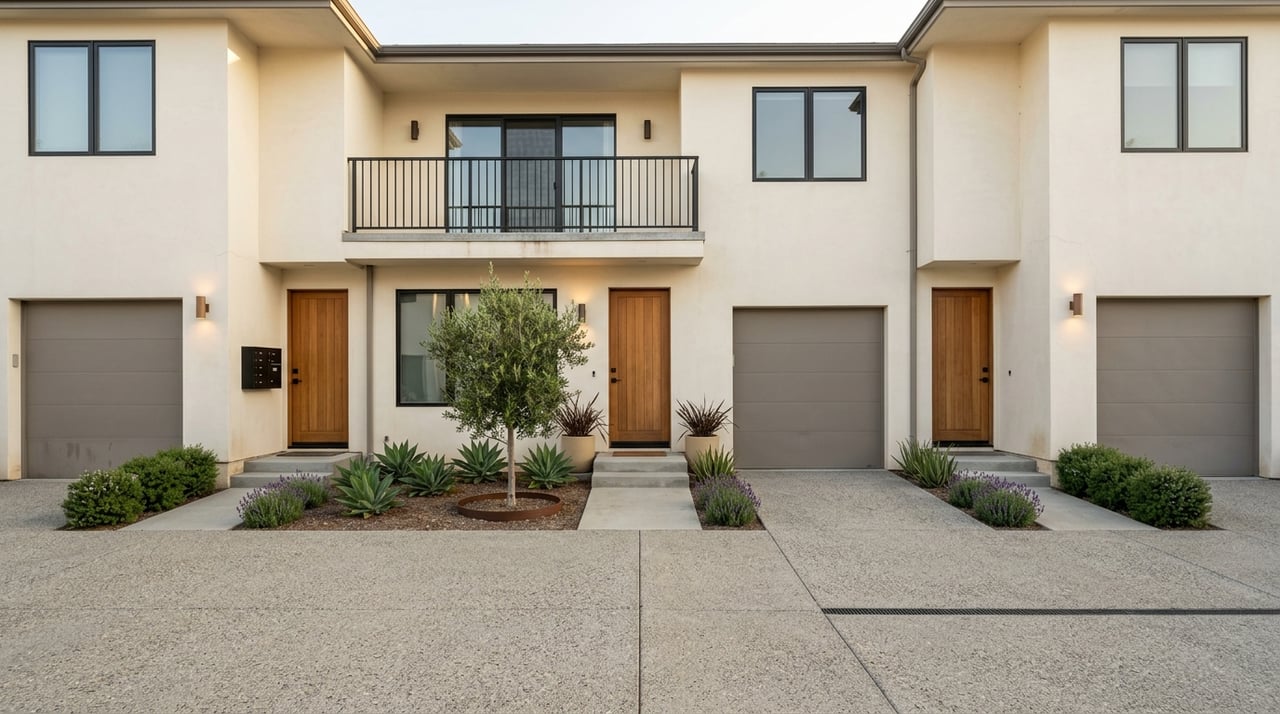
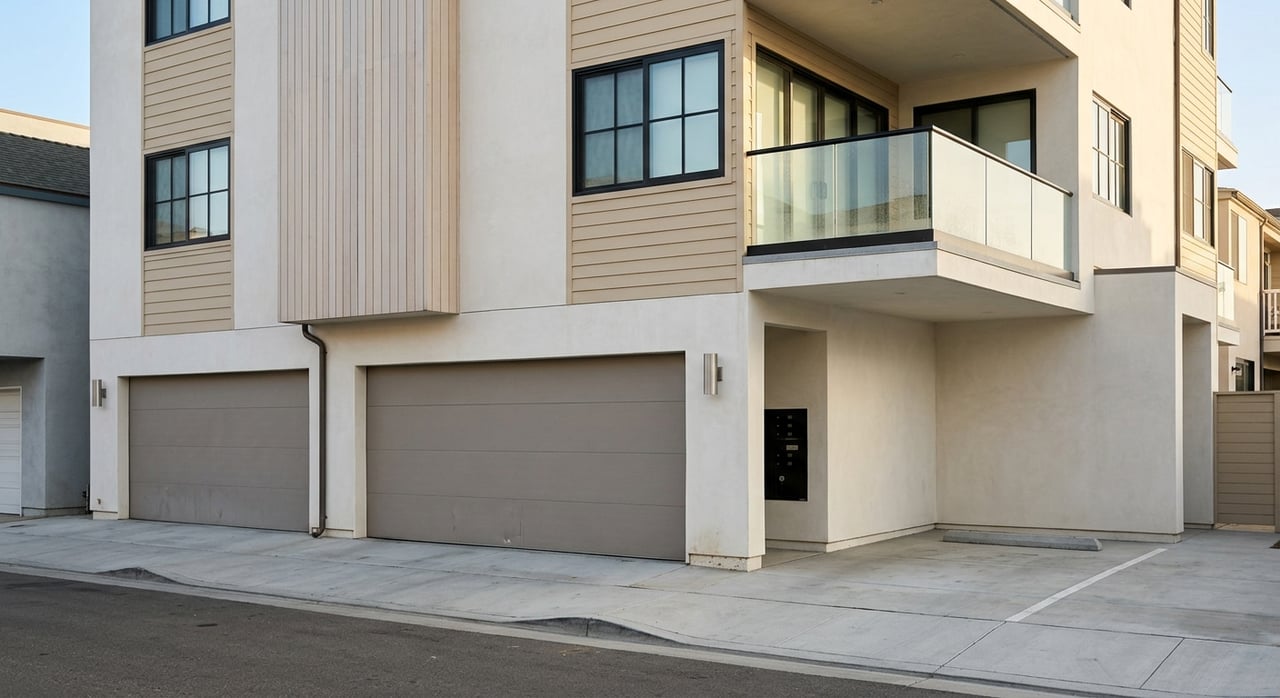
Some newer San Marcos homes reflect what many buyers now expect from modern construction: efficient layouts, attached product, and garage-forward design. A local example is The Hill District at North City, where current product types include townhomes and detached condominiums with two-car garages.
That does not mean all newer homes are small-lot or attached. The Oakcrest specific plan shows that newer development in San Marcos can also include single-family homes on a range of lot sizes. The key point is simple: newer does not always mean the same thing here.
Established neighborhoods in San Marcos are not one-size-fits-all either. The city’s General Plan divides San Marcos into eight planning-area neighborhoods, including Barham/Discovery, College Area, Lake San Marcos, Questhaven/La Costa Meadows, Richland, Richmar, and Twin Oaks Valley.
That means an established area could feel low-density and residential, more mixed-use, or more historically layered depending on where you look. This variety is one reason buyers should compare neighborhoods directly rather than assume older always means the same kind of living experience.
The General Plan describes Lake San Marcos as mostly low- and very-low-density single-family housing, with nearby commercial and office uses. Buyers who prefer a more settled neighborhood pattern and a lower-density setting often focus on established areas like this.
In contrast, Barham/Discovery includes a wider range of housing types, along with commercial, park, open-space, and university uses. That mix shows how established areas in San Marcos can still offer variety and convenience depending on the exact location.
Twin Oaks Valley adds a deeper sense of place to the established-neighborhood conversation. City cultural-resource documentation says Twin Oaks was founded in 1875 and remained rural until the 1990s, when golf-course and housing-tract development changed the valley.
That history matters because some buyers are drawn to neighborhoods that feel less uniform and more rooted in the city’s long-term growth pattern. Established areas often have more variation in home age, street layout, and surrounding land uses, which can create a more layered neighborhood feel.
It is easy to assume established neighborhoods are quieter but less connected. In San Marcos, that is not always true. The city’s Consolidated Plan notes that Richmar has neighborhood parks built since 2011, Sprinter light rail access built in 2008, and the county library and San Marcos Community Center within walking distance.
Citywide, San Marcos also highlights 44 parks, seven facilities, two aquatic complexes, and a 72-mile trail network. So when you compare newer versus established neighborhoods, convenience and recreation should be reviewed property by property rather than judged by age alone.
The smarter question is usually not “new or old?” It is “which tradeoffs fit you best?” Here are the biggest factors to weigh when you are shopping in San Marcos.
Many buyers assume older homes automatically come with larger lots. That can be true sometimes, but not always. San Marcos zoning includes estate lots of 20,000 square feet or more, low-density lots of 10,000 square feet or more, and traditional subdivision lots of 7,500 square feet or more, according to the city’s zoning ordinance.
So if lot size matters to you, verify the parcel details separately from the age of the home. A newer home may sit on a generous lot, while an older home may be attached or more compact.
Established homes can offer charm, flexibility, and mature surroundings, but they may also come with more upkeep. San Marcos housing-element language notes that homes more than 30 years old commonly need major rehabilitation such as a new roof, foundation work, or plumbing repairs. That does not mean every older home will need big-ticket work right away, but it does mean inspections and repair budgeting matter.
It also matters that the city generally requires permits for work involving structural, plumbing, electrical, or mechanical systems. If you are considering updates, remodeling costs should be part of your planning from the start.
One advantage of newer homes is that many major systems are newer too. That can reduce near-term repair risk and provide benefits tied to current building-performance standards. The U.S. Department of Energy points to better building systems as a source of improved comfort, durability, and lower operating costs, and it notes that Zero Energy Ready homes are often significantly more efficient than a typical new home.
Still, lower repair risk does not always mean lower ownership cost. In some newer communities, HOA dues, amenity upkeep, or private-street maintenance may offset part of that savings. Oakcrest is one local reminder that private infrastructure can shift some costs to homeowners through the HOA structure.
Newer neighborhoods often have a more planned and uniform character. In San Marcos, that may mean integrated trails, parks, shared open spaces, and a strong master-planned feel. If you like consistency, easy maintenance, and neighborhood amenities, that can be a real plus.
Established neighborhoods often feel more varied. You may find a broader mix of home styles, ages, and uses nearby. For some buyers, that variety feels more organic and appealing. For others, it means less predictability. Neither is better across the board. It depends on how you want to live.
When you compare newer homes with established neighborhoods in San Marcos, use a practical, listing-by-listing approach:
This kind of side-by-side review usually gives you a clearer answer than focusing on age alone.
If you want lower-maintenance living, modern layouts, and a more programmed neighborhood environment, newer San Marcos communities may be the better fit. If you prefer a more established setting, potentially more variation in home styles, and a neighborhood with a longer-built identity, older areas may make more sense.
The right move often comes down to how you balance maintenance, monthly costs, lot size, and lifestyle priorities. With decades of experience helping buyers and sellers weigh property condition, value, and negotiation strategy, Donna Seals can help you compare your options with a steady, practical approach.


Exceeding expectations and making your real estate experience smooth, successful, and truly rewarding.

DONNA MARIE SEALS | CA DRE# 00918036
ADDRESS 4125 MISSION BLVD SAN DIEGO CA 92109