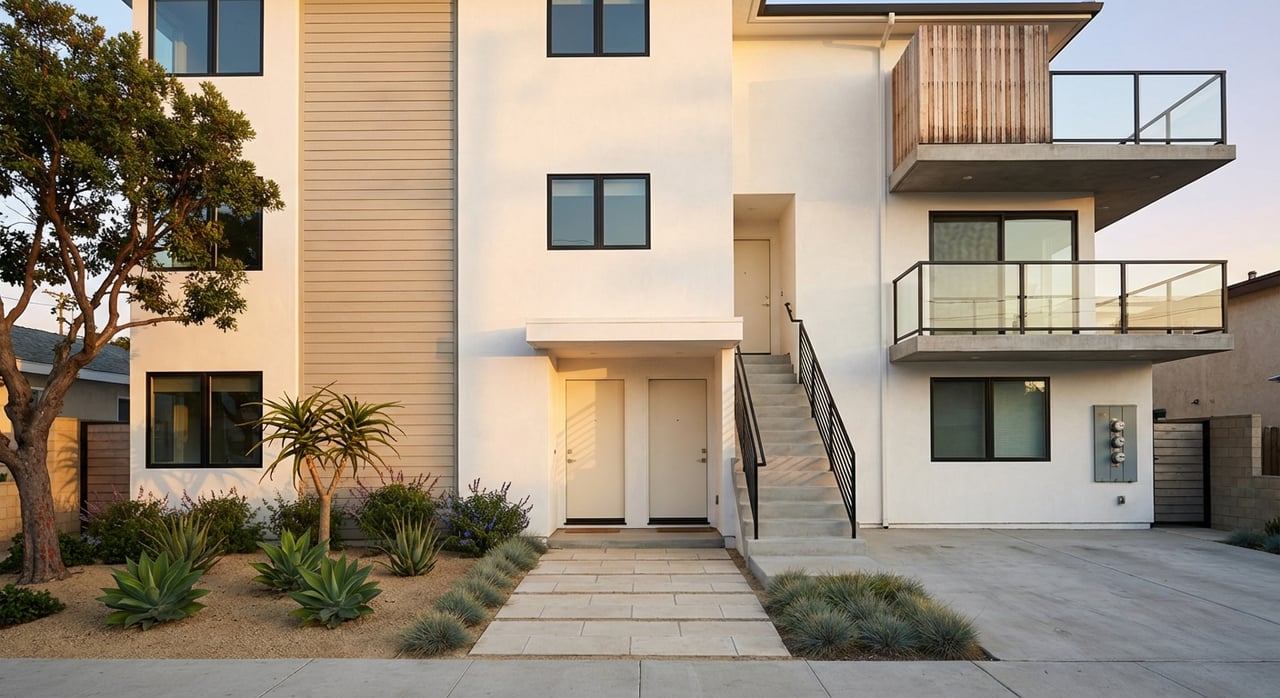
Oceanside Duplex Investment Guide for 2–4 Unit Buyers
February 19, 2026
February 19, 2026
Is a duplex or triplex in Oceanside the right next move for your portfolio? With strong coastal demand, steady rent growth, and owner‑occupant financing options that lower entry costs, small multifamily can be a smart way to add cash flow near the beach. You want clear numbers, local rules in plain English, and a simple framework to compare deals. This guide gives you market context, underwriting tips, financing pathways, and a due‑diligence checklist tailored to Oceanside so you can move with confidence. Let’s dive in.
Oceanside benefits from a diverse renter base. The Oceanside Transit Center connects to the COASTER, Amtrak Pacific Surfliner, and Metrolink, which supports commuter demand across the LOSSAN corridor and into central San Diego. You can review corridor connections and regional mobility initiatives through Caltrans District 11 resources on the I‑5 corridor and transit integration for context on connectivity. Proximity to Marine Corps Base Camp Pendleton is another steady demand driver. Base materials and marketing plans document a large population of active duty, civilian, and family members that help sustain year‑round rental demand and turnover in North County coastal cities like Oceanside.
On pricing and momentum, the median sale price across all home types in Oceanside is about $870,000 in early 2026 snapshots. Duplex and triplex listings vary widely by location and condition, with many investor‑grade properties ranging from roughly $1.1 million to $3.5 million in recent samples. Always verify current MLS comps for your exact micro‑location.
On rents, the broader Oceanside average sits around the mid‑$3,000s per month. As a quick guide, 1‑bedrooms often land in the low $2,000s, 2‑bedrooms in the low $3,000s, and 3‑bedrooms in the mid‑$3,000s to mid‑$4,000s depending on location and finish level. Unit‑level comps from current active and recently leased listings will tighten your pro forma.
From an investor lens, San Diego County multifamily cap rates have been compressed, commonly ranging from the mid‑4 percent to low‑5 percent for traded assets in 2024 and 2025. Regional brokerage reporting shows this broader context for valuation pressure that can filter down to smaller 2 to 4 unit deals in tight submarkets across San Diego. Larger 11‑plus unit transactions in mid‑2024 to 2025 also reported average cap rates near 4.8 percent and price‑per‑unit in the low $300k range, with GRMs in the low‑to‑mid teens. These data points help you benchmark what “market” looks like when you size small deals in the county.
You will often see mid‑century wood‑frame apartments, converted single‑family structures, and some newer infill buildings in and around Downtown and South Oceanside. Common unit mixes include combinations of 1‑ to 3‑bedrooms. Expect typical coastal issues to review closely: on‑site parking constraints, code or upgrade requirements, and deferred maintenance in older buildings. Roofing, plumbing, electrical, pest, and HVAC are frequent line items you will want priced by a contractor during diligence.
Knowing a few metrics helps you sort listings fast:
Market valuation indicators can guide your screen. Larger San Diego multifamily deals have shown GRMs in the low‑to‑mid teens, and county cap rates have generally sat near the 4 to 5.5 percent range depending on location and risk profile. Smaller 2 to 3 unit properties can trade at different multiples due to owner‑occupant competition and boutique zoning potential in the county reporting.
Use conservative ranges when you run the math on Oceanside small multifamily:
Adjust rents, expenses, or price to see how your cap rate and GRM shift. Add financing to project cash‑on‑cash returns and DSCR.
If you plan to live in one unit, owner‑occupied programs can lower your down payment and rate. If you will rent all units, expect higher down and tighter underwriting.
Tip: Get pre‑approved with your chosen program before you write. In a competitive coastal submarket, certainty wins.
California’s Tenant Protection Act (AB 1482) caps annual rent increases on covered units at the lower of 5 percent plus regional CPI or 10 percent. It also sets just‑cause eviction rules for many units older than 15 years. SB 567, effective in 2024, strengthened enforcement and tightened some no‑fault provisions, including owner move‑in and substantial remodel standards. Review a summary of the changes from the California Apartment Association here, and a plain‑English explainer of AB 1482 notices and exemptions here.
Oceanside also advanced a local Residential Tenant Protections Ordinance during 2024 and 2025. Council direction changed during the process, so investors should verify the current municipal code and any filing or notice obligations using the City’s Legistar portal covering the ordinance history. Do not assume short‑term rentals are allowed. Oceanside maintains separate STR rules that typically require permits or registration, so check the City’s current Planning and Code Enforcement pages before you underwrite STR income.
Important: AB 1482 requires specific written notices about exemption status. For example, certain single‑family homes or owner‑occupied duplexes may be exempt when conditions are met, but only if you provide correct written disclosures. Penalties for improper no‑fault terminations increased under SB 567.
Use this list to structure your offer period and lower risk before you release contingencies:
When a new duplex or triplex hits the market, move quickly through three passes:
If a property advances all three passes, you are ready to refine comps and write competitively.
You deserve experienced, steady guidance when you buy income property at the coast. With over 40 years of local representation, deep negotiation experience, and practical remodeling insight, our team helps you validate rents, size repairs, and structure offers that win without overpaying. We can also connect you with local lenders, inspectors, and contractors so your diligence moves fast and your pro forma is grounded in real numbers.
If you are considering a duplex or triplex in Oceanside or another North Coastal San Diego submarket, reach out for a pressure‑free strategy call. You will get clear comps, a tailored underwriting template, and a plan to compete with confidence. Connect with Donna Seals to get started.

Exceeding expectations and making your real estate experience smooth, successful, and truly rewarding.

DONNA MARIE SEALS | CA DRE# 00918036
ADDRESS 4125 MISSION BLVD SAN DIEGO CA 92109