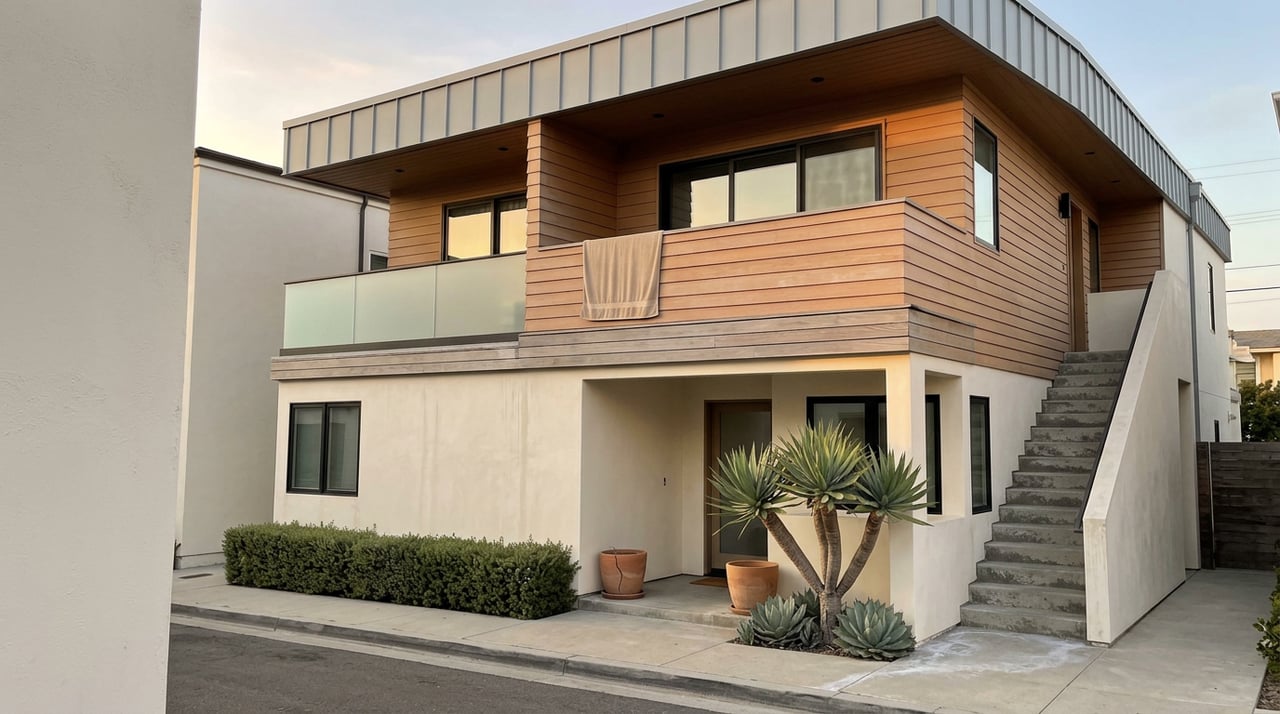
The Pacific Beach Short-Term Rental License Doesn't Come With the House
September 24, 2026
September 24, 2026
Does the Airbnb income transfer when you buy a licensed Pacific Beach rental? Most buyers assume it does. The listing photos show five-star reviews, the seller's broker mentions "turnkey income," and the numbers in the pro forma already include summer occupancy rates near the top of the market. It reads like the license is baked into the deed, the way a pool or a parking spot would be.
It isn't. San Diego's short-term rental license is issued to a person, tied to one address, and by the city's own rule it does not move when the property sells. Buy the house and you still have to apply for your own license, on your own timeline, into a citywide cap that's been closing for two years and is now tightening on the exact license type most Pacific Beach investors need.
San Diego's Short-Term Residential Occupancy ordinance defines a host as a natural person with the legal right to occupy a dwelling and allow it to be rented for stays under thirty-one nights. That person can hold exactly one license at a time, for one address at a time, and the city has been explicit that licenses are not transferable between owners or between properties. A seller's STRO license dies with the sale. It does not sit in the title company's stack of documents waiting to be handed over at closing.
That single rule reshapes what you're actually buying. A Pacific Beach property with an active, well-run short-term rental history is worth more to the current owner because they hold the license that makes the income legal. To you, walking in as the buyer, that same history tells you what the property has earned under someone else's paperwork. Your income projection depends on whether you can get your own license, not on whether the seller ever had one.
Pacific Beach investors almost always need a Tier 3 license, the category for whole-home rentals on properties that aren't the owner's primary residence. According to San Diego Lineup, Tier 3 is capped citywide at roughly one percent of San Diego's housing stock, a formula tied to SANDAG's housing estimates.
That cap has been closing steadily. Early in 2026, city-tracked figures put remaining Tier 3 slots at around 964. West Coast Home Stays reported that by May 2026, with 4,777 licenses already issued, that number had fallen to 829. The pace is worth sitting with: roughly 135 licenses issued in a few months, on a finite pool.
Here's the part worth knowing before you write an offer. Mission Beach already lived this story. Truvi reported in March 2026 that Mission Beach's Tier 4 licenses had all been issued; the tier is capped at thirty percent of the neighborhood's housing units. The city opened a short window, July 1 through August 15, 2025, for new applicants to join a waitlist, then closed it and ran a lottery to set positions. Tier 3 hasn't reached that point yet. But it's running the same math, just a few years behind. A license that's easy to get today because you called the city and applied is not guaranteed to be easy to get in two years, and Mission Beach already shows what happens to a license once it becomes the scarce asset rather than the routine paperwork.
| Tier | Who it covers | Cap status |
|---|---|---|
| Tier 1 | Home-sharing, host on-site, up to 20 nights/year | No cap |
| Tier 2 | Whole-home, host's primary residence | No cap |
| Tier 3 | Whole-home, non-primary, citywide | Capped near 1% of housing stock, hundreds of slots remaining |
| Tier 4 | Whole-home, Mission Beach only | Capped at 30% of neighborhood units, waitlist closed |
There's a second number that quietly changed and hasn't caught up in a lot of buyer math. San Diego's transient occupancy tax used to sit at a flat 10.5 percent everywhere in the city. That changed on May 1, 2025, when Measure C's additional tax took effect under a zone system that splits the city into three bands for the next 42 years. Pacific Beach falls into Zone 2, the middle band that covers most of the city between the far north and south edges and downtown. Zone 2 carries an added 2.25 percent, bringing Pacific Beach's total transient occupancy tax to 12.75 percent on every short-term stay.
If your comparison property, your spreadsheet, or a rental estimate you found online is still running the old 10.5 percent figure, you're overstating net income on every booking by more than two full points. On a property pulling in the range of what oceanfront Pacific Beach units have reported in recent market data, that's not a rounding error. It's the kind of gap that changes whether a deal clears your return threshold.
None of this means Pacific Beach is a bad place to buy a short-term rental. The neighborhood, together with Mission Beach under the shared 92109 zip code, holds close to a third of every active STRO license in the city, and Pacific Beach's own community planning area accounts for a meaningful share of that total on its own. Demand for licensed short-term inventory here is real and it isn't going away. What changes is the order of operations. You need to underwrite the license, not just the house.
A few things worth doing before you sign anything:
Enforcement has also tightened around all of this. California's Short-Term Rental Facilitator Act took effect January 1, 2026, giving the city direct access to platform data on listings, addresses, and hosts. Operating without a license while you wait on an application is a materially riskier bet than it was even a year ago.
If Tier 3 is closed or the waitlist is long when you're ready to close, a mid-term rental strategy, thirty-one nights or longer, sits entirely outside the STRO ordinance. No license, no tier, no cap. It's a real option for a buyer who wants income from the property now rather than a license application that might take months.
Can the seller just add my name to the license before closing? No. A host must be a natural person with the legal right to occupy the unit, and licenses aren't transferable between people or properties under any circumstance the ordinance allows.
What happens if I buy assuming a Tier 3 license is available and the cap fills before I apply? You'd be holding a property you can't legally rent short-term. This is exactly why checking availability before closing, not after, matters.
Buying a short-term rental in Pacific Beach is still a sound move for the right buyer. It just requires treating the license the same way you'd treat any other condition of the deal, something to verify, negotiate around, and build into your numbers rather than assume. That's the kind of detail that's easy to miss from a listing photo and expensive to discover after you've already closed.
If you're weighing a Pacific Beach investment purchase and want a straight read on what a specific property's license situation actually looks like before you write an offer, Real Estate by Donna Seals has spent decades working coastal San Diego deals exactly like this one. Reach out for a conversation about your goals, or start with a free home valuation if you're weighing a sale on the other side of the same market.
This article is general information, not legal, tax or financial advice. Consult a qualified professional about your situation.
Exceeding expectations and making your real estate experience smooth, successful, and truly rewarding.

DONNA MARIE SEALS | CA DRE# 00918036
ADDRESS 4125 MISSION BLVD SAN DIEGO CA 92109